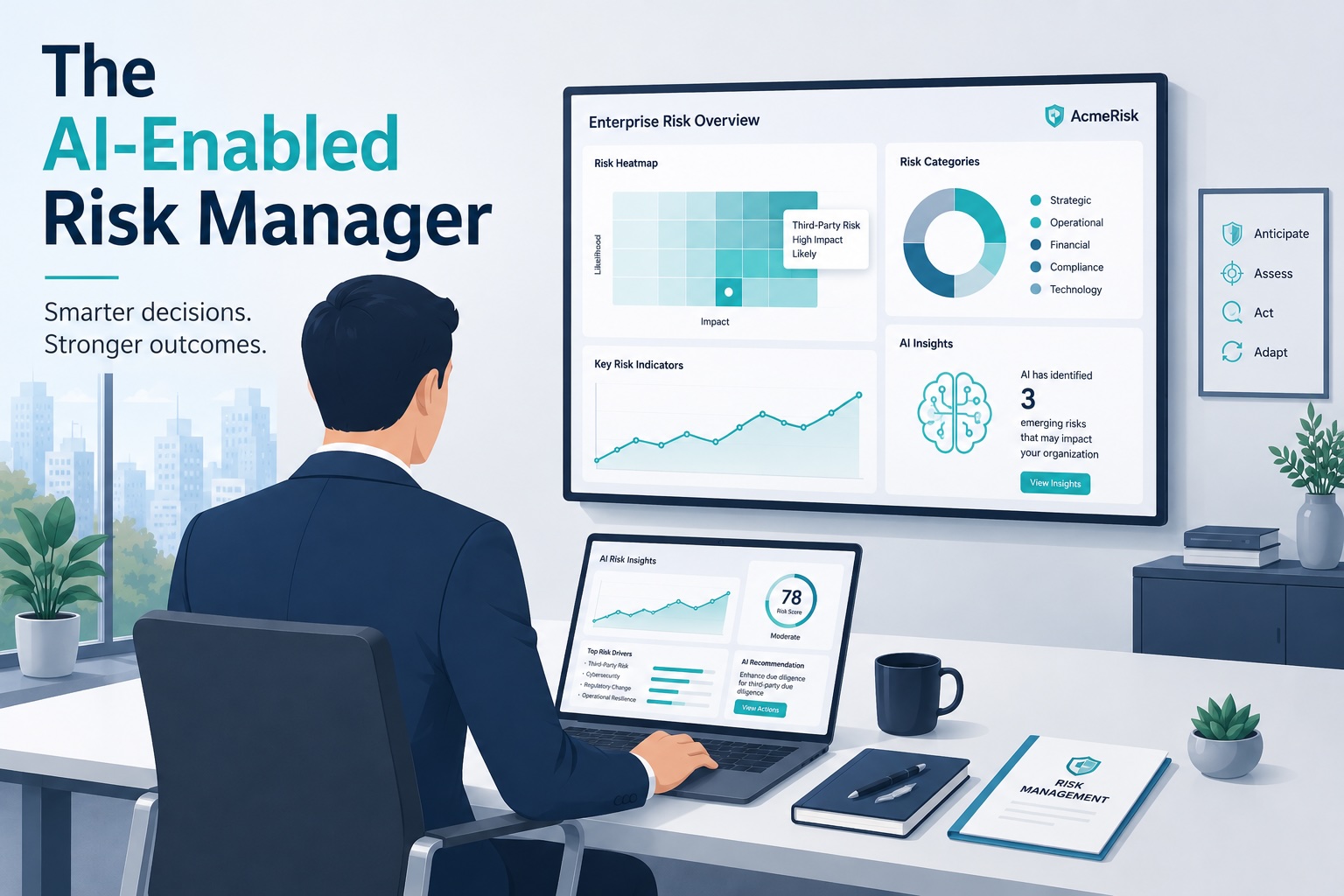
What an AI Risk Assistant Can Do
A practical guide for small businesses, not-for-profits and busy leaders

In my experience, small organisations rarely struggle with risk they struggle with capacity, consistency and clarity. An AI Risk Assistant enables businesses to change that quickly. This article explains what an AI assistant can actually do in day-to-day risk work and how it helps teams work faster, smarter and with more confidence.
Who this is for:
Directors, executives, risk managers, SME owners and NFP leaders who want modern, simple, practical risk support without the expense of a full risk team or complex enterprise software.
The Problem: Risk Management Hasn’t Kept Up With Reality
Most small organisations face the same issues:
- People write risks differently
- Reports are inconsistent
- Staff lack confidence in their language or ratings
- Everything takes longer than it should
- Risk work interrupts more important priorities
- Spreadsheets stretch as far as they can go, then fail
An AI Risk Assistant gives small organisations the kind of support previously only available to big enterprises. It doesn’t replace human judgment. It gives people leverage, especially when time, experience or resources are limited.
Below is a practical breakdown of what an AI Risk Assistant can actually do today.
1. Turn Ideas into Clear, Well-Written Risks
Most risks don’t start as risks. They start as:
- A vague concern
- A project update
- A comment in a meeting
- An email that “sounds risky”
An AI Risk Assistant can turn a plain-English description into a clear risk statement with structure, context and meaning. It separates:
- Event (what might happen)
- Cause (why it might occur)
- Impact (what it affects e.g. operations, finances, people, service delivery)
It removes jargon and ambiguity so that any staff member, from a frontline coordinator to a CFO, can articulate a risk consistently.
This alone eliminates one of the biggest pain points for SMEs and NFPs: messy, vague, inconsistent risk language.
2. Standardise and Improve Risk Descriptions
A good risk assistant doesn’t just write risks, it fixes them.
It can:
- Rewrite unclear risks so they follow a consistent structure
- Remove duplication and overlap
- Suggest tighter phrasing
- Help staff express the real issue instead of symptoms
- Provide suggestions of good risk statements
This is how an organisation moves from “everyone writes risks differently” to “we speak the same language”.
3. Suggest Practical, Context-Aware Controls
Controls are often misunderstood. Many organisations rely on whatever controls people can think of in the moment which leads to gaps.
An AI Risk Assistant can generate controls that are:
- Practical for small teams
- Tailored to the risk (preventative, detective, corrective)
- Written in plain, everyday English
- Realistic for an SME or NFP environment
- Useful for both operational and strategic risks
It means teams don’t start from a blank page and don’t miss obvious control gaps that could have prevented past incidents.
4. Provide Consistent, Evidence-Backed Risk Ratings
One of the biggest frustrations in risk management is inconsistency. Three people rate the same risk and come up with three different answers.
AI helps by:
- Suggesting likelihood and consequence ratings
- Explaining the reasoning
- Highlighting where a risk might sit outside appetite
- Pointing out inconsistencies across the register
- Helping risk owners validate or adjust their view
This improves capability, reduces debate, and saves hours of meetings.
5. Draft Planned Control Implementation Plans
When introducing new controls, leaders often ask:
- “What would this take to implement?”
- “What steps are involved?”
- “How long should this realistically take?”
- “What needs to happen first?”
An AI Risk Assistant can look at the risk, the current control environment and the organisation’s context, then generate a practical, scenario-specific implementation plan.
This usually includes:
- The purpose of the new control
- Key steps needed to put it in place
- Resource or capability considerations
- A realistic timeline
- Dependencies or prerequisites
- How to measure that the control is working
For resource constrained organisations, this removes guesswork and gives teams a clear path to strengthening their environment.
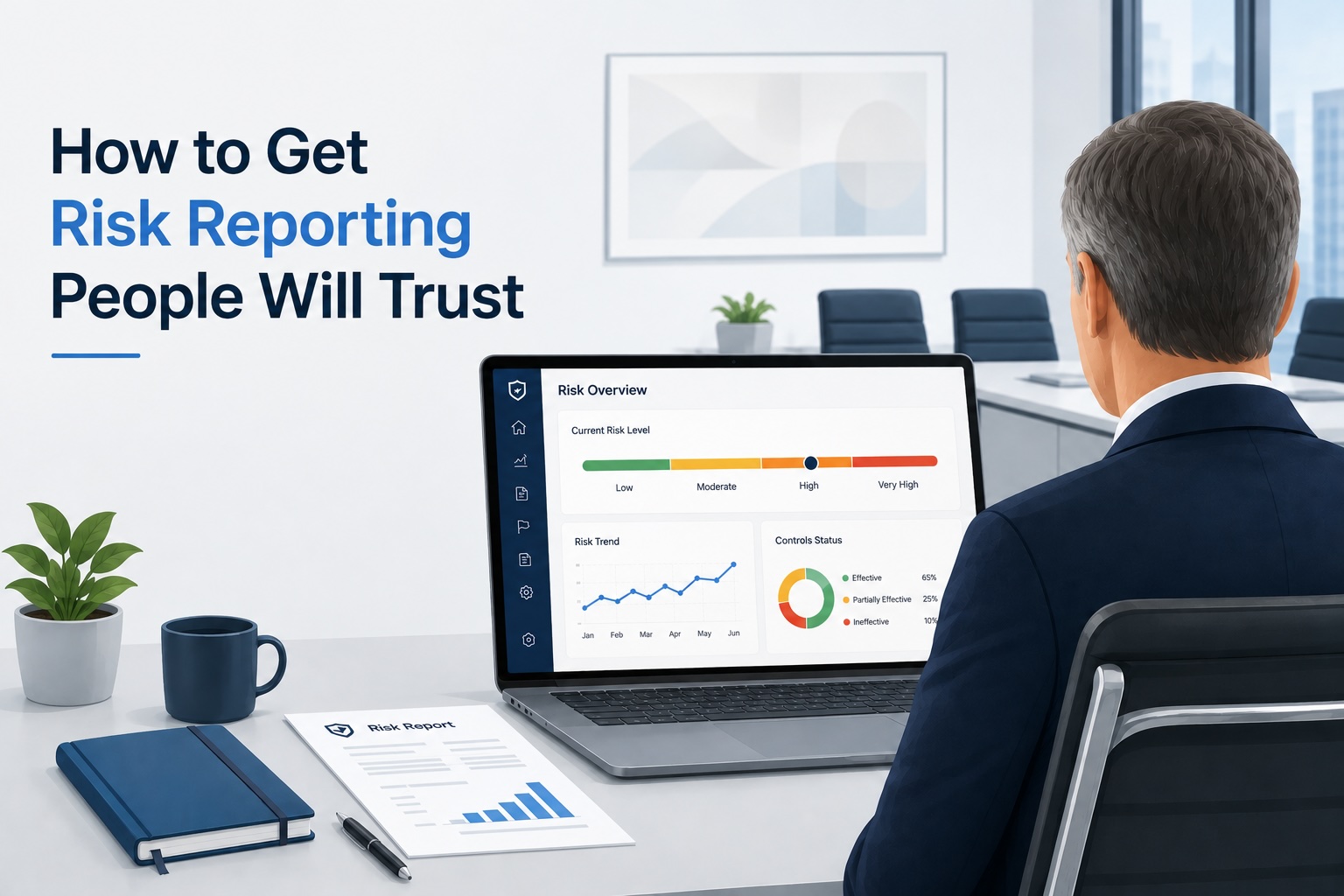
6. Generate Board-Ready Risk Reports in Minutes
Reporting is where most time is lost.
An AI Risk Assistant can transform data into:
- Executive summaries
- Board-ready exception based analysis
- Appetite breach reporting
- Trend and movement analysis
- Key themes across programs or departments
- Control gaps and areas needing attention
- “What changed since last quarter?” summaries
Instead of spending days preparing papers, risk managers and executives can focus on the conversation and not the formatting.
7. Build Simple, Usable Policies and Framework Elements
Policies and frameworks often end up too long, too complex or too theoretical.
AI can:
- Draft simple, plain-English policies
- Suggest responsibilities and practical processes
- Provide sample templates for appetite, reporting and review cycles
- Ensure clarity without adding bureaucracy
- Help translate risk concepts for frontline or operational staff
This is especially helpful for NFPs or small teams that don’t have formal risk expertise.
8. Support Project and Change Risk Assessments
Projects move quickly, involve multiple stakeholders, and often introduce unfamiliar risks. An AI Risk Assistant strengthens project governance by supporting teams in real time.
AI can help by:
- Highlighting risk implications when project scope or requirements change
- Suggesting risks based on project context (technology, vendors, timelines, resourcing)
- Helping teams identify assumptions and dependencies they may have overlooked
- Recommending practical controls that match the project’s maturity and capacity
- Creating project-specific risk registers in minutes
- Ensuring consistent structure and language across all project risks
- Identifying where risks escalate from operational to strategic impact
- Supporting project leads without formal risk training to make better decisions
This keeps risk thinking embedded throughout the project lifecycle and not bolted on at the end.
9. Standardise Risk Work Across the Organisation
Every organisation struggles with consistency.
AI helps by:
- Giving every staff member the same guidance, in the same language
- Standardising structure, ratings and terminology
- Reducing reliance on one person to “fix” every risk
- Helping non-experts participate confidently
- Turning risk processes into everyday habits
This creates clarity and maturity far beyond what spreadsheets can offer.
10. Provide Insights, Patterns and Early Warning Flags
Spreadsheets can list risks but they can’t analyse them.
AI can highlight:
- Patterns across the business
- Concentrations of risk in particular areas
- Missing or ineffective controls
- Stale or outdated risks
- Appetite breaches
- Emerging themes you might not have noticed
This is how small organisations gain “big organisation insight” without the overhead.
11. Tailor Examples for SME & NFP Contexts
One of the biggest barriers to risk maturity is relevance.
AI can instantly provide examples tailored to:
- Retail, healthcare, disability, construction, education, community services
- Micro, small or medium organisations
- Volunteer-based or casual-heavy workforces
- Grant-funded, fee-for-service or mixed-revenue models
It removes the guesswork and helps people understand risk in their world, not someone else’s.
Safe Adoption: Keeping Humans in the Loop
AI should support (not override) human judgment. At StartRisk we have a core believe that keeping humans engaged in the risk management process is essential and we recommend that every organisation adopting AI in risk should follow a few simple principles:
1. Human-in-the-Loop
AI drafts. Humans review, interpret and approve. This maintains accountability, governance and common sense.
2. Transparency
Teams should know when AI has contributed to content or recommendations.
3. Validation
AI suggestions should be tested against real context, not accepted blindly.
4. Oversight & Documentation
Decisions should still be recorded, monitored and owned by real people.
When used safely, AI becomes a capability multiplier — not a risk.
The Takeaway
An AI Risk Assistant doesn’t replace your people. It gives small organisations the support they’ve never had:
- Consistency
- Clarity
- Speed
- Better decisions
- More confidence
- Less admin
- Higher-quality reporting
It turns risk management from a burdensome, administrative chore into a practical, everyday tool for better leadership.
Try StartRisk
StartRisk was designed to give SMEs and NFPs access to high-quality, AI-enabled risk management without the cost, complexity or long implementations of traditional tools.
If you want to see how AI can support your team - from risk writing to reporting - try StartRisk free at any time.