Recruiting Risk Teams in Regulated SMEs and NFPs
Why It’s So Hard (and What Actually Helps)
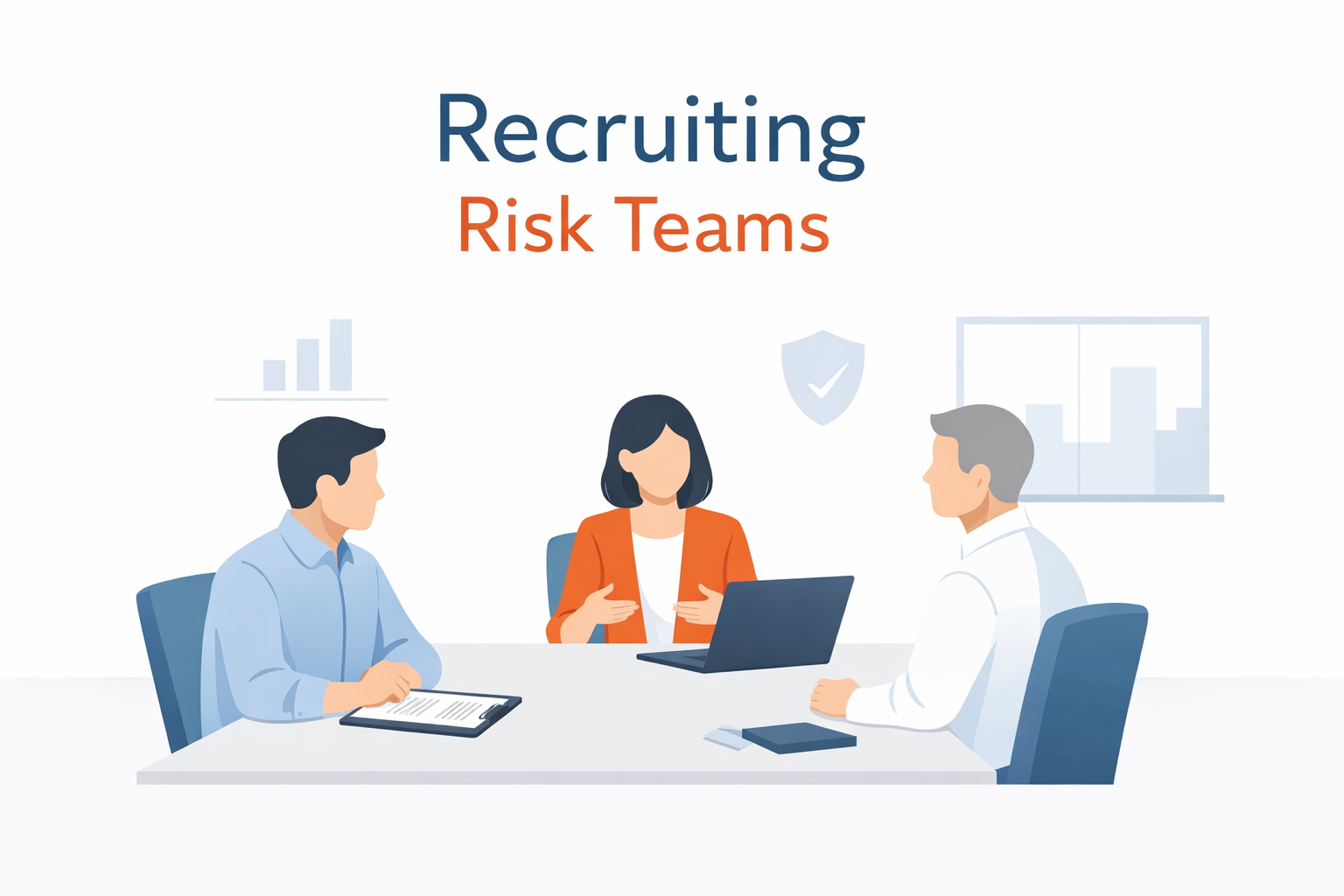
Recruiting risk professionals in regulated small and medium businesses and not-for-profits is hard not because risk people don’t exist, but because the role itself is often set up to fail.
In small organisations, risk roles are overloaded, under-defined, and heavily dependent on manual processes. That combination creates long recruitment cycles, continuity risks, and frustrated new hires who struggle to add value quickly.
This article breaks down the real challenges of recruiting risk teams in regulated SMEs and NFPs and practical ways to address them without pretending you’re a large enterprise.
The Reality: Risk Roles in Small Organisations Are Rarely “Just Risk”
Challenge 1: The “Frankenstein” risk role
In most regulated SMEs and NFPs, you’re not recruiting a risk manager.
You’re recruiting one role to cover:
- Risk management
- Work health and safety
- Compliance and regulation
- Audit coordination
- Quality or accreditation
- Incident management
- Sometimes privacy, cyber, or governance support
This creates two problems:
-
The candidate pool shrinks dramatically
You’re looking for someone with deep breadth across multiple disciplines—often at a salary that reflects only one. -
You end up with capability gaps anyway
Even strong candidates are usually stronger in some areas than others, which means parts of the role quietly underperform.
Why this matters
Unclear or overloaded roles lead to:
- Misaligned expectations
- Early burnout
- Risk work becoming reactive and compliance-driven instead of strategic
What helps
- Be explicit about what matters most in the role (e.g. risk and board reporting vs operational compliance).
- Design the role around decision-support, not just administration.
- Use tools and templates to reduce reliance on “expert memory” across every discipline.
Small Teams Create Big Continuity Risks
Challenge 2: Long recruitment cycles create operational exposure
In small teams (often teams of one) recruitment delays are not just inconvenient. They’re risky.
Common patterns:
- Extended vacancies (often during audits or accreditation cycles)
- Risk registers not updated for months
- Board reporting quality and accuracy drops
- Knowledge walks out the door with no handover
In larger organisations, this is absorbed.
In SMEs and NFPs, it creates single-point-of-failure risk.
Why this matters
- Risk oversight weakens precisely when scrutiny is highest
- Executives or board members are forced into risk roles they’re not equipped for
- The organisation becomes dependent on external consultants
What helps
- Standardised risk language, templates, and reporting formats
- A single source of truth for risks, controls, and incidents
- Systems that allow someone new to understand the risk environment quickly
This isn’t about replacing people, it’s about reducing dependency on individuals.
Poor Systems Make Onboarding Slow and Frustrating
Challenge 3: Manual tools make new starters less effective
Many SMEs and NFPs still rely on:
- Spreadsheets
- SharePoint folders
- Email-based risk updates
- Inconsistent templates created over time
When a new risk team member joins, onboarding often looks like:
- “Here’s the spreadsheet”
- “This column means something different depending on who filled it in”
- “We don’t really use the framework, but auditors ask for it”
Why this matters
- New hires take months to become effective
- Early confidence drops
- Good candidates question whether the organisation is serious about risk
What helps
- Clear, embedded risk frameworks (see our article on a Minimum Viable Risk Framework)
- Consistent event → cause → impact risk statements (see our articple on How to Write a Clear Risk Statement)
- Tools that guide how to write, rate, and treat risks
Onboarding should be about judgement and context, not deciphering spreadsheets.
The Role Is Often Set Up as “Compliance Police”
Challenge 4: Risk roles lack authority and influence
In many regulated SMEs and NFPs, the risk role:
- Sits outside decision-making
- Is brought in after decisions are made
- Is seen as a reporting or audit function
This makes the role unattractive to experienced candidates, who want to:
- Influence decisions
- Work with leadership
- Improve organisational resilience—not just “tick boxes”
Why this matters
- Strong candidates self-select out
- Risk becomes reactive and defensive
- Turnover increases
What helps
- Position the role as decision support, not compliance enforcement
- Give the role direct access to executives and boards
- Align reporting to risk appetite and strategic objectives
People stay where their work matters.
Market Reality: You’re Competing With Bigger Organisations
Challenge 5: Regulated risk skills are in short supply
Risk, compliance, and governance skills are in demand, especially in:
- Health
- Disability
- Financial services
- Education
- Aged care
Large organisations offer:
- Narrower roles
- Bigger teams
- Mature systems
- Higher pay
SMEs and NFPs can’t win that battle directly.
What helps
- Offer impact and scope, not bureaucracy
- Make the role achievable, not overwhelming
- Use technology to level the playing field
Good risk professionals don’t want chaos, they want clarity.
A Practical Reframe: Design for Capability, Not Headcount
The organisations that recruit (and retain) good risk people do one thing well:
They design the role around capability, not heroics.
That means:
- Reducing manual effort
- Standardising core risk tasks
- Making risk understandable across the organisation
- Supporting judgement with tools, not replacing it
This is where AI-enabled risk management quietly changes the equation:
- Faster onboarding
- More consistent outputs
- Less dependence on individual experience
- Better use of limited risk resources
Not as a replacement for people, but as force-multipliers for small teams.
Final Thought
Recruiting risk teams in regulated SMEs and not-for-profits isn’t hard because leaders don’t care about risk.
It’s hard because the structure, tools, and expectations often make the role unattractive and fragile.
Fix the environment—and recruitment gets easier.
Good risk people don’t want perfect systems.
They want systems that let them do good risk work.
Try StartRisk!
If you’re trying to build or stabilise a risk function with limited resources and you’d like to have a no-obligation discussion with one of our Risk Experts, you can book a complimentary 20 minute discussion.